
Toyota Electric Vehicles – Comprehensive Guide

Toyota Electric Cars at a Glance
- There are three levels of Toyota electrification available: hybrid, plug-in hybrid, and all-electric vehicles.
- Standard hybrids use an electric motor to assist the gas engine and can drive on battery power alone at low speeds. Plug-in hybrids (PHEVs) and battery electric vehicles (BEVs) offer dedicated, high-speed electric driving.
- Three levels of charging can be used to power a plug-in hybrid or electric vehicle.
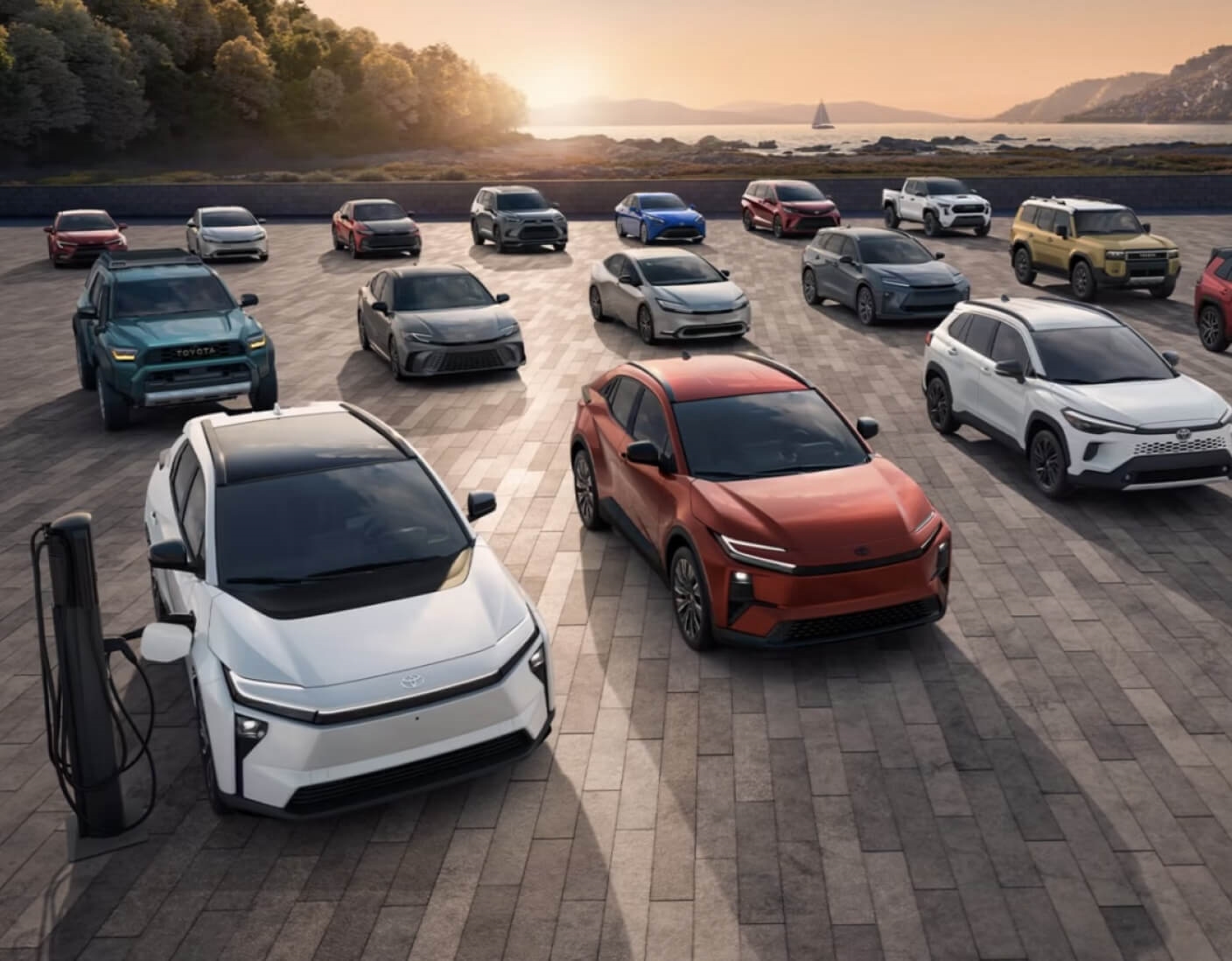
- For the 2026 model year, the Toyota lineup includes three fully electric vehicles, two plug-in hybrids, and 15 hybrid options.
Toyota Electric Vehicles & Different Types of EVs
A Toyota electric car might be the next worthy contender for your daily driver. As the automotive industry evolves, all-electric vehicles are becoming the standard. Toyota has developed a selection of electric models with snappy performance and reduced carbon footprints. You'll get to choose your level of electrification between hybrid, plug-in hybrid (PHEV), and all-electric (EV) models. We've compiled the details here, but there's more to learn when you explore our selection at Toyota Walnut Creek.
So, what types of electrification are there? Here are the highlights of each level:
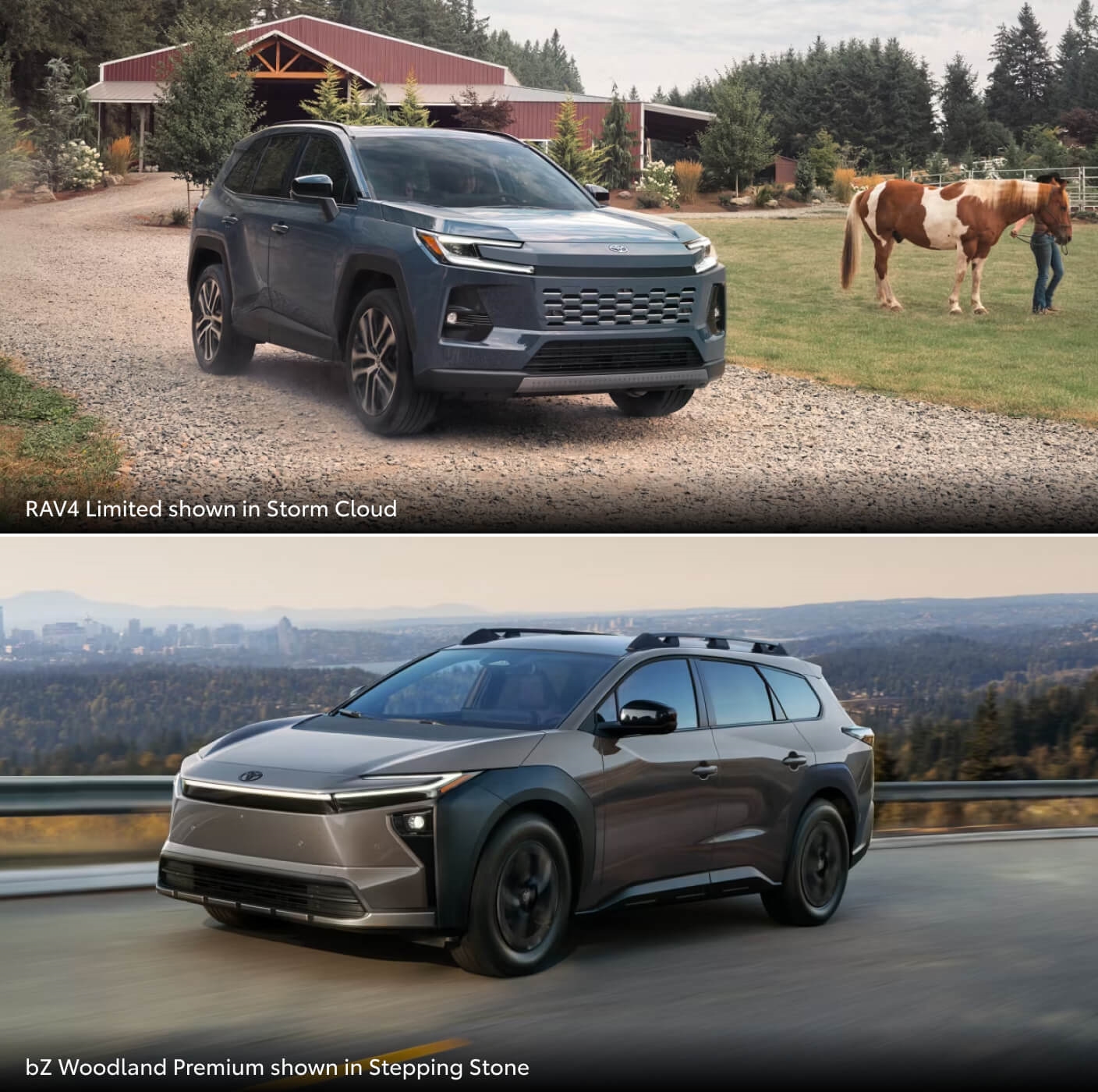
- Hybrid: A hybrid uses both a gas engine and an electric motor. While the gas engine is the primary power source, these models feature an "EV Mode" for short, silent, low-speed driving (such as in a parking garage). New Toyota RAV4 vehicles are exclusively hybrid and can achieve up to an EPA-estimated 47/40/43 MPG (City/Highway/Combined).1
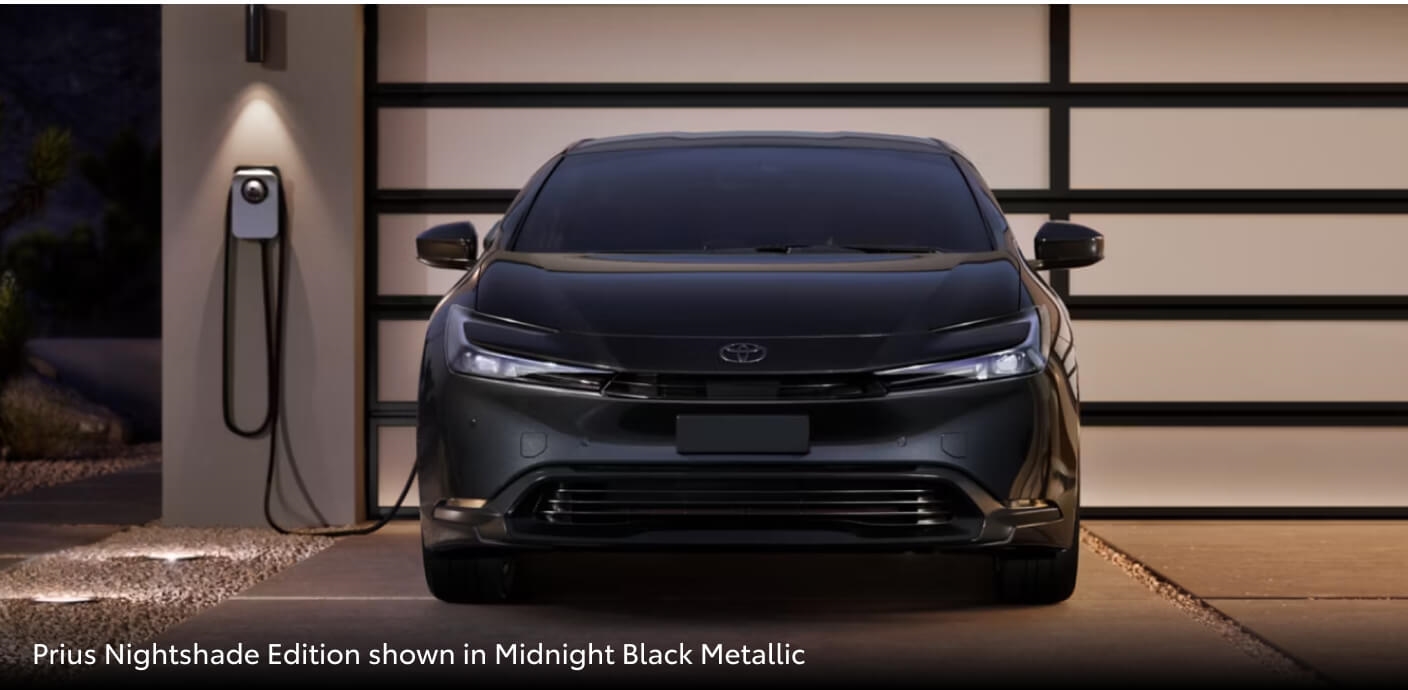
- Plug-In Hybrid (PHEV): A plug-in hybrid operates like a standard hybrid but features a much larger battery and a more powerful electric motor. This allows you to drive at highway speeds for long distances using only electricity. The 2026 Toyota Prius Plug-In Hybrid offers an all-electric driving range of up to an EPA-estimated 44 miles,2 switching to normal hybrid mode once the battery is low.
- All-Electric (EVs): These models offer the ultimate experience in sustainable driving with no gasoline engine whatsoever. They rely entirely on large battery packs and electric motors. The Toyota bZ, for example, achieves a total driving range of up to an EPA-estimated 314 miles on a single charge.2
There are currently three all-electric vehicles, two plug-in hybrids, and 15 hybrid vehicles in the Toyota lineup. Let's dive into the details of performance, charging options, and the electrified driving experience.
Toyota EV Tech & Charging
Before we help you find the Toyota electric vehicle or plug-in hybrid model of your dreams, let's talk a little about EV tech and charging. Toyota electric cars or PHEVs are a little different than traditional internal combustion vehicles. EVs, for example, don't have a combustion engine, allowing you to save on maintenance costs by eliminating oil changes. PHEVs and hybrids retain a combustion engine, though PHEVs may require oil changes less frequently if driven mostly in electric mode. Additionally, the regenerative braking systems found in these models help capture energy during deceleration, further improving your overall efficiency.
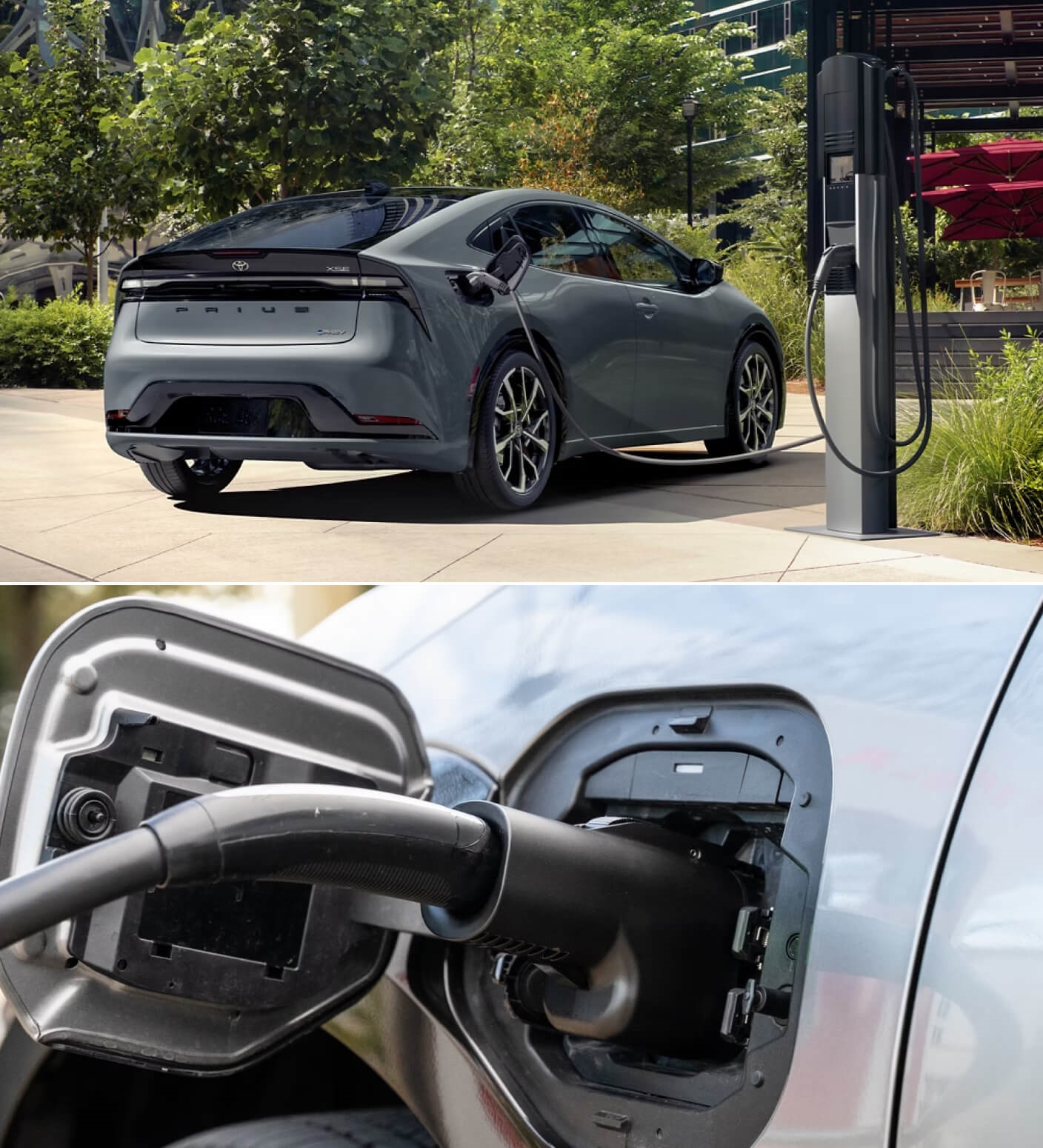
To benefit from all-electric range, you'll need to charge your Toyota electric car. There are three levels of charging available:
- Level 1 Charging: This uses a standard household outlet to add a few miles every few hours.3 It's the slowest option, but it is effective for a small replenishment after a short trip.
- Level 2 Charging: This is ideal for plug-in hybrids and home use. This method requires a wall-mounted charging box and can fully charge most electric vehicles in just a few hours.3
- Level 3, or DC Fast-Charging: This method is found at public DC fast-charging stations and is the most time-conscious way to charge. Most models, like the Toyota bZ, can get from 10% to 80% in approximately 30 minutes.3
EV vs. Gasoline: Why Choose an EV
More drivers are making the leap from gas-only models to a Toyota EV or plug-in hybrid for several key reasons:
- EVs and PHEVs either eliminate or significantly reduce gas costs.
- All-electric models don't need oil changes; PHEVs often require less frequent engine maintenance.
- EVs and PHEVs in electric mode provide instantaneous torque for quicker acceleration.
- EVs often feature a front trunk ("frunk") since there is no engine to place under the hood, providing more storage space.
- The absence of a combustion engine results in fewer vibrations and less cabin noise.
Although we think EVs might be a critical part of driving in the future, we understand that some drivers may prefer – or need – gas models. We'd be happy to help you shop our hybrid Toyota RAV4 lease deals.
Alternatively, enjoy the best of both worlds with electrification and a combustion engine backup with one of our Toyota RAV4 PHEV lease deals.
Electrified Toyota Options: Your Buyer's Guide
What type of electrified vehicle do you need? For example, if you need seating for more than five, you might consider the three-row hybrid Toyota Sequoia.
Are you the outdoorsy type who needs all-wheel drive and significant power? The Toyota RAV4 Plug-In Hybrid offers up to 324 horsepower and a driving range of up to 54 miles2 without gas.
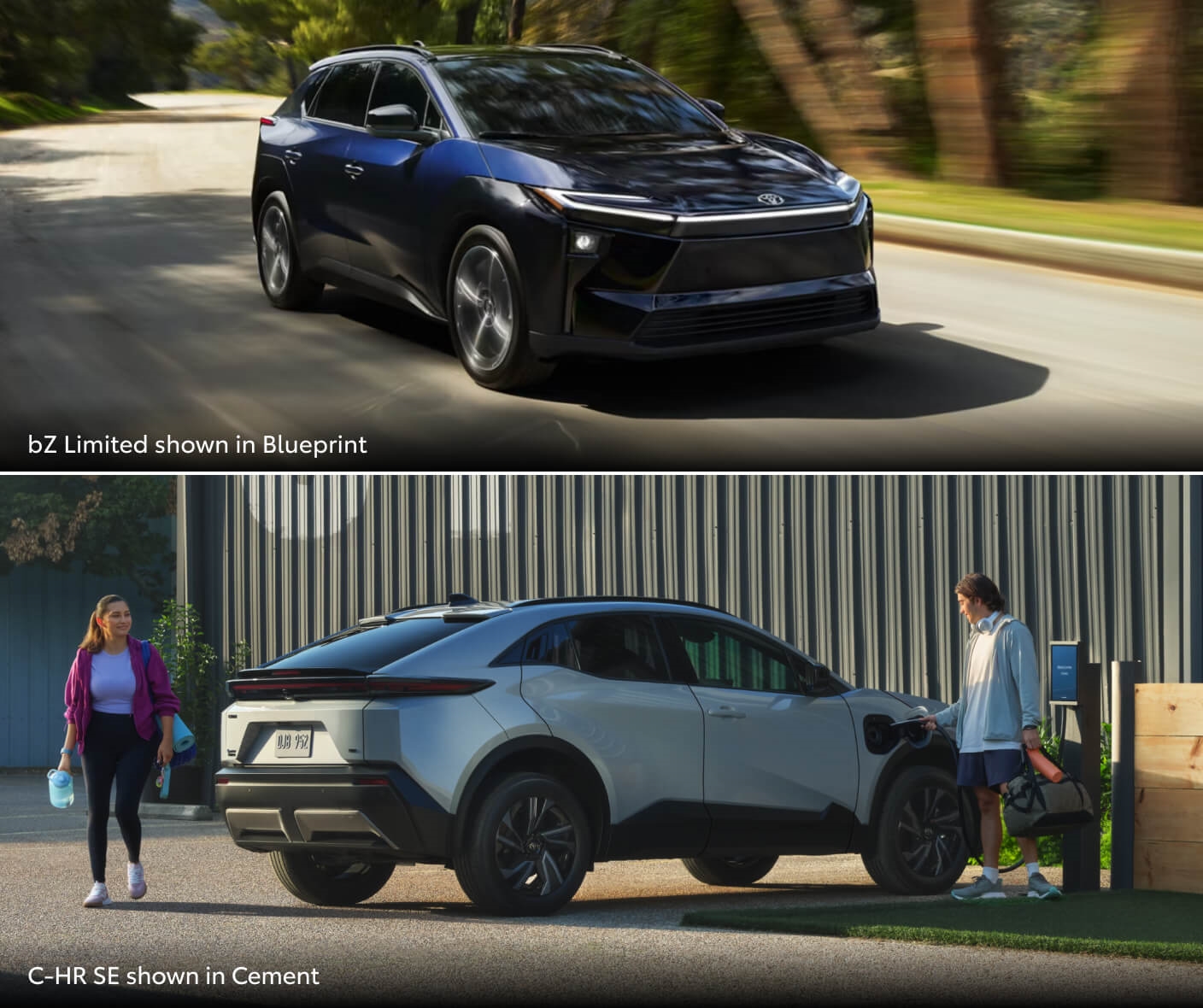
For city driving, the all-electric 2026 Toyota bZ is a supremely competent ride with its agile sizing and up to 338 horsepower.
If you're still struggling to decide, here are some of the specifics about our Toyota electric vehicle lineup and plug-in hybrids to help you make the right call:
- 2026 Toyota bZ: Bursting with form and function, new Toyota bZ vehicles are fun to drive and offer up to an EPA-estimated 314 miles of driving range on a single charge.2
- 2026 Toyota bZ Woodland: Enjoy the form and function of the Toyota bZ but with added exclusive designs, more horsepower, and standard AWD and X-MODE. With this model, you also get to travel up to an EPA-estimated 281 miles2 on a single charge.
- 2026 Toyota C-HR: Designed to be bold, this all-wheel-drive SUV runs only on electricity and can travel up to 287 miles2 before stopping for a charge.
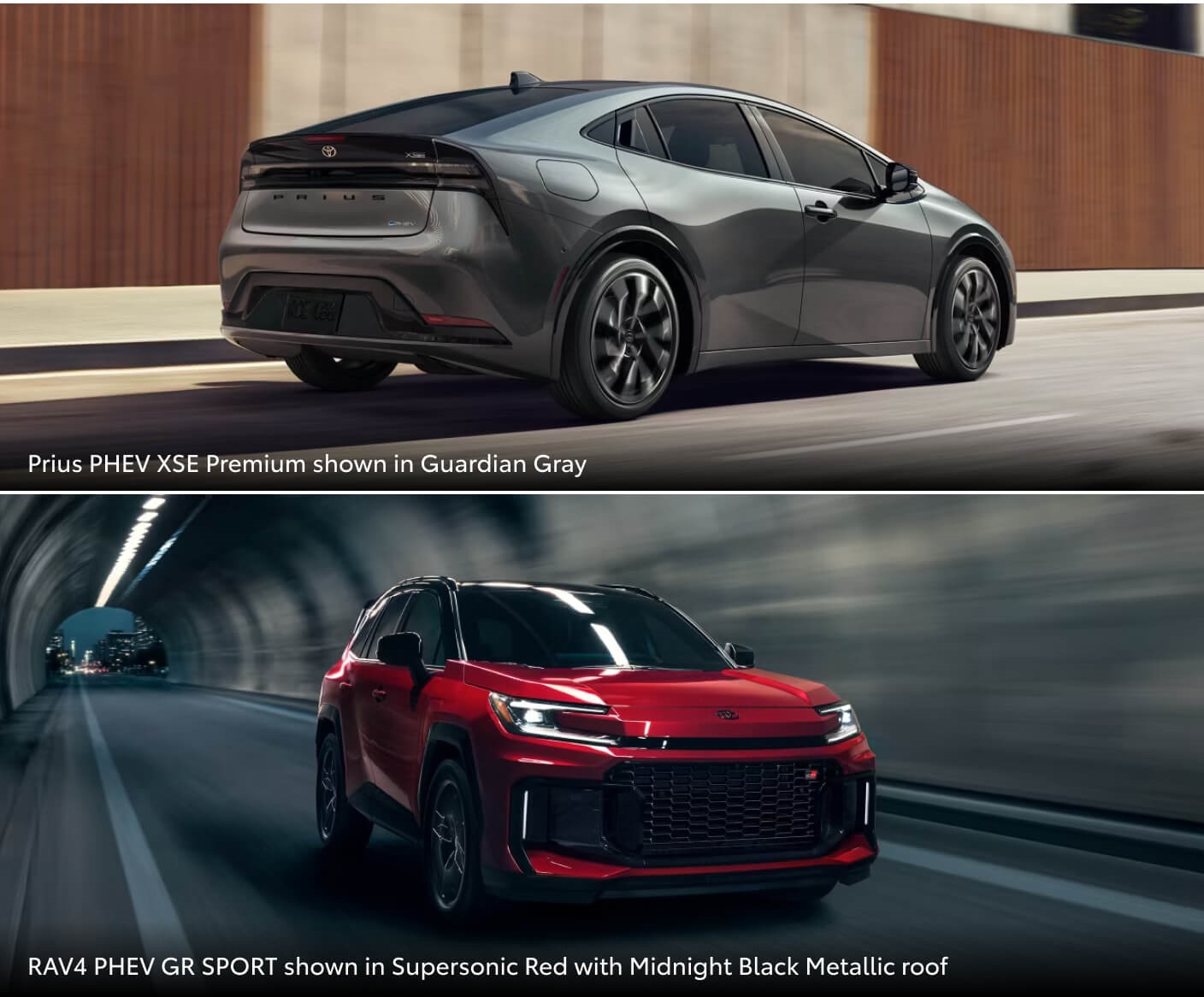
- 2026 Toyota Prius Plug-In Hybrid: Alongside futuristic and angular styling, this PHEV provides 220 horsepower and allows you to travel up to 44 miles2 in EV mode.
- 2026 Toyota RAV4 Plug-In Hybrid: With much of the same all-terrain and off-roading chops as the gas-only alternative, new Toyota RAV4 PHEVs are ready for anything. Travel up to 54 miles2 in EV mode and benefit from up to 324 net horsepower.
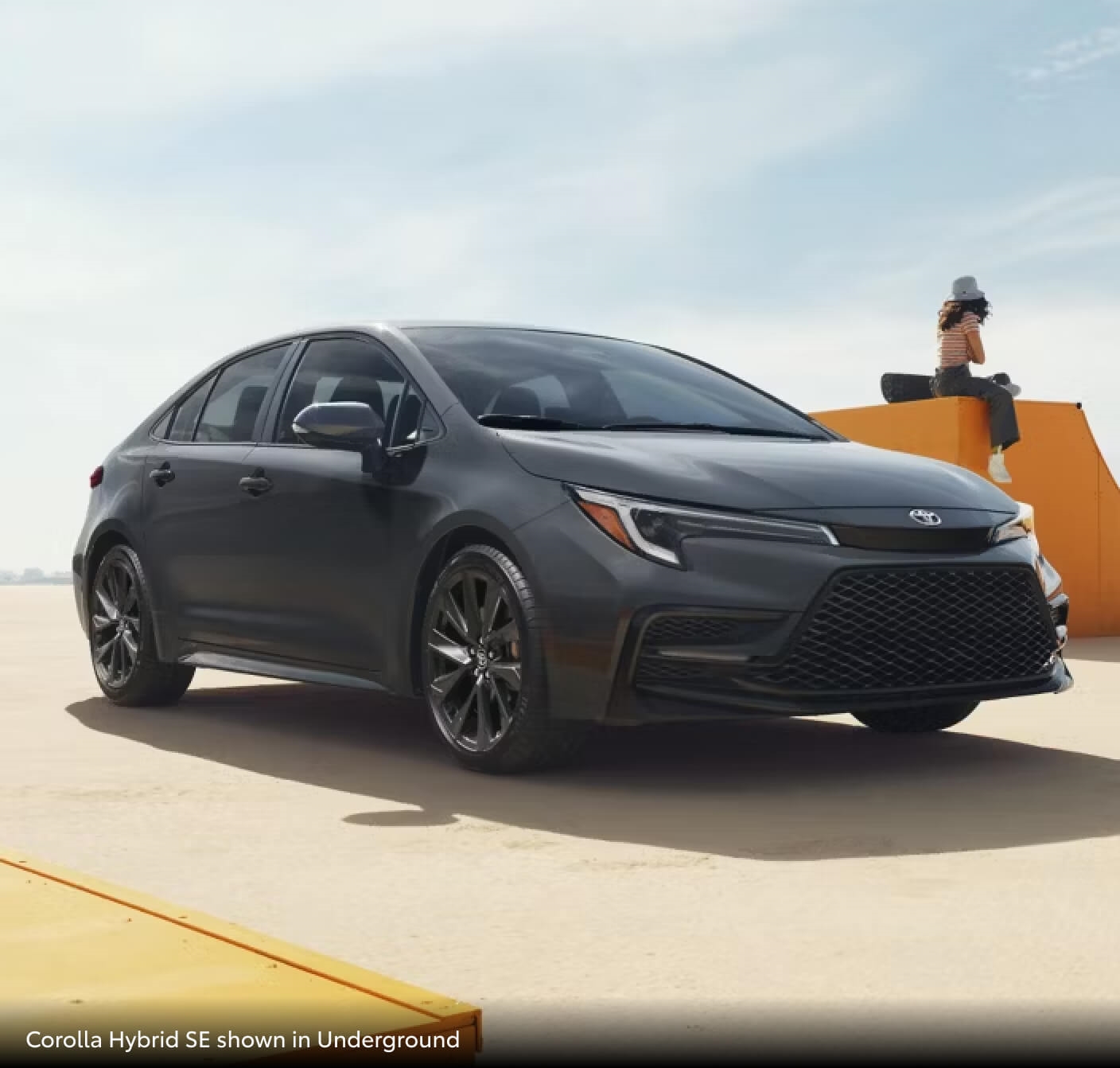
In addition to the above Toyota models, there's an exhaustive selection of hybrid vehicles, including big names. The new Toyota RAV4, for example, is now exclusively available as a hybrid. Other hybrid icons include the Corolla Hybrid, Corolla Cross Hybrid, Camry, Crown, Grand Highlander, and Sequoia, among others. Whether you prioritize fuel economy, interior luxury, or rugged capability, there is a Toyota electrified model tailored to your specific driving requirements.
Make Your Next Toyota Vehicle an Electrified One
We hope our Toyota electric vehicle guide has helped you learn more about what we think is the future of driving. If you have any further questions or would like to schedule a tour of our electrified options, contact us today.
We'd also be happy to review your personalized Toyota financing options with you. Your dream car might just be yours before you leave our lot.
At Toyota Walnut Creek, our dedicated team is here to ensure you have a seamless transition into the world of electric driving. We invite you to visit our dealership to experience these innovative vehicles firsthand and discover how easy it is to upgrade to a more sustainable future.
Frequently Asked Questions
How does owning a Toyota electric vehicle change routine maintenance?
Routine maintenance for an electric Toyota is different than that for a gas-reliant model. Namely, an electric vehicle doesn't require an oil change because it doesn't have a gas engine. However, it will still need cabin air filter replacements, brake system maintenance, and routine battery checks.
Are Toyota electric vehicles suitable for long-distance driving?
All-electric Toyota vehicles can be suitable for long-distance driving! In fact, the Toyota bZ all-electric SUV can travel up to 314 miles2 on a single charge on select configurations. Additionally, the growing network of DC fast charging stations makes road trips more convenient.
How do Toyota hybrid systems transition between gas and electric power?
The system switches between gas and electric power so smoothly that you'll barely notice it happening. It automatically chooses the most efficient power source for your current speed and driving conditions, so you can just focus on the road.
1Use for comparison purposes only. Your mileage will vary for many reasons, including your vehicle's condition and how/where you drive. See www.fueleconomy.gov.
2EPA-estimated total driving range for when vehicle is fully charged and operated under ideal driving conditions. Use for comparison purposes only. Actual range may decrease significantly depending on speed, outside temperature, accessory use, how/where you drive, charging habits, and other factors. Battery capacity also decreases with time and use, which will reduce range. See www.fueleconomy.gov and Owner's Manual for details.
3Charging times may vary and are influenced by several factors, including but not limited to outdoor temperature, battery temperature, charging equipment, battery condition, and the overall condition of the vehicle. For precise information on charging times for a specific vehicle model, please contact our dealership.